Sustainable Menswear: The Best Ethical Brands and Where to Find Them
Five labels, each one describing its own materials and production in public, which is the only reason they are here.
Sustainable menswear has a narrower problem than womenswear: the volume sits in a
handful of garment types (jeans, tees, outerwear, footwear), and those are exactly the types
where material shortcuts are cheapest to hide. The labels below each take a different route out of
that, and each publishes enough about how they work that the claim can be read rather than
trusted.
What follows is a short list on purpose. Each entry says what the label makes, what it says about
its materials, and the reason it is worth a look, plus the question still worth asking, because no
label answers everything.
Between them these sustainable menswear brands cover denim, footwear, reworked secondhand clothing
and zero-waste cutting. That spread is deliberate: the best ethical menswear does not come from one
route, and a list of five labels doing the same thing five ways would tell a reader far less.
02
1800 Gallons — deadstock and repurposed denim
A circular label built entirely on material that already exists: it describes itself as working
with deadstock and repurposed denim, designing from pre-existing materials to extend their life
cycle. The name is a reference to the water figure attached to a single pair of conventionally
produced jeans.
Why it matters: denim is the highest-impact garment most men own, and buying it
made from cloth that has already been woven removes the largest part of that impact at source.
Still worth asking: deadstock supply is finite and irregular, so ask what happens
to a style once the roll runs out. 1800gallons.com
03
Buzigahill — reworked secondhand, sent back
A Kampala label whose Return to Sender project redesigns secondhand clothing that was discarded
in the Global North and shipped to Uganda, then sells the reworked garments back into the markets
the clothes originally came from. It is one of the few labels whose business model is an argument.
Why it matters: it addresses the end of the chain most ethical menswear ignores: what happens to donated clothing after it leaves a collection bin.
Still worth asking: pieces are one-offs by definition, so sizing and repeat
purchases work differently. buzigahill.com
04
8000Kicks — hemp footwear
Shoes built around hemp fibre, sold on being waterproof as well as plant-based; the label presents them as the first waterproof hemp shoes. Hemp needs comparatively little water and no
irrigation in most growing regions, which is the material argument.
Why it matters: footwear is the hardest category to buy well, because a shoe is a
laminate of several materials and adhesives. Starting from one plant fibre simplifies it.
Still worth asking: what the sole is made of, and whether it can be replaced.
8000kicks.com
05
Stem — zero-waste garments
A label organised around zero-waste pattern cutting: garments drafted so that the pieces tile
across the cloth and little or nothing is left on the cutting-room floor. The constraint shows in
the shapes, which is the honest tell that it is real rather than a marketing line.
Why it matters: cutting waste is invisible to the customer and typically runs at
around fifteen per cent of the cloth. Designing it out is a production decision, not a
purchasing one.
Still worth asking: where the cloth itself comes from, since zero-waste cutting says nothing about the fibre. stem.page
06
Pete Collection — timeless design, made in California
A small California label founded by one woman, built around traditional styles and comfort rather
than seasonal turnover. It is the least technical entry here and the clearest example of the
simplest sustainability strategy available: make a garment people keep wearing.
Why it matters: style longevity is the only lever that works without any material
innovation at all. A garment worn for ten years beats a recycled one worn for two.
Still worth asking: fibre origin and factory, which a small label can usually
answer directly by email. petecollection.com
How these ethical menswear labels were chosen
Three rules, applied before anything was written. The label had to publish its own material and
production position, in its own words, on its own site. No claim here rests on a press mention.
The label had to be reachable at that site when this page was written. And each entry had to bring
a different route to the same problem, so the list reads as five approaches rather than five
versions of one.
What that excludes is worth stating: labels making unquantified claims, labels whose only
published detail is a certification badge, and companies running a small conscious line beside a
conventional business. None of those are accusations; they are simply cases where a reader cannot
check the work.
Buying sustainable mens clothing that lasts
The category rewards a small number of habits more than it rewards brand loyalty. Buy for the
garment you actually wear weekly rather than the one you aspire to; that is where durability pays
back. Check whether a sole, a zip or a button can be replaced before checking the material story.
And treat fit as an environmental question — the best sustainable menswear brands in the world
cannot save a jacket that hangs unworn because the shoulders are wrong.
Second-hand belongs in this guide too. For most sustainable mens clothing categories, a
well-made older garment outperforms a new sustainable one on every measure that matters, which is
why the vintage directory sits
alongside these labels rather than opposite them.
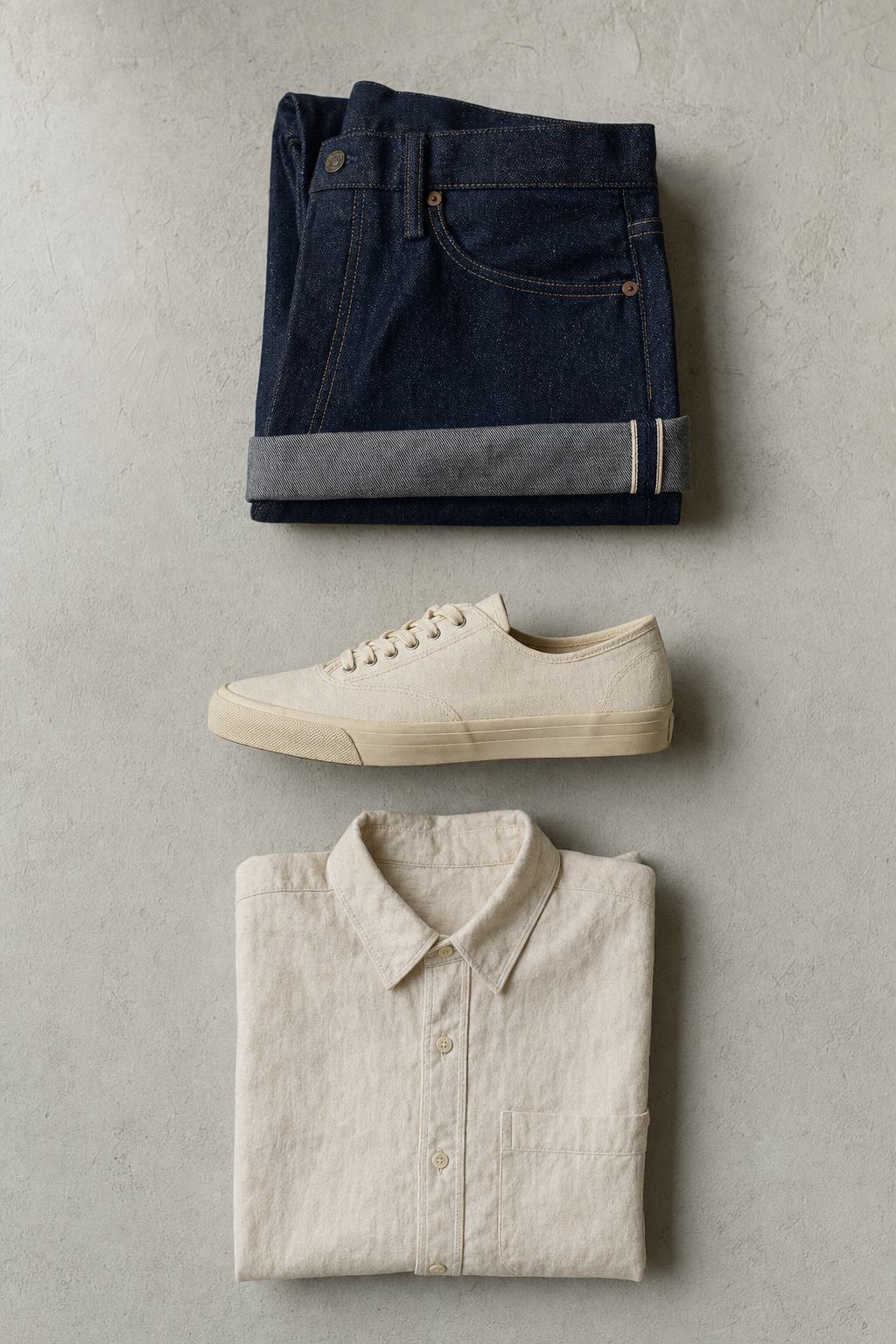
The three garment types where material choice moves the most: denim, footwear, plain cotton.
Questions
Common questions
What makes menswear sustainable?
In practice, four things: what the cloth is and where it came from, where the garment was assembled, whether it can be repaired, and how long the style stays available. Denim, footwear and plain cotton are where those choices move the most, because that is where the volume sits.
Is deadstock fabric genuinely better?
Yes, with a limit. The cloth already exists, so the fibre, dyeing and weaving impact is already spent. The limit is supply: deadstock rolls are finite and irregular, so a label built on them cannot repeat a style indefinitely.
Are hemp shoes durable enough for everyday wear?
Hemp fibre is strong and the material argument is sound: little water and no irrigation in most growing regions. The part worth asking about is the sole, since that is usually what fails first and is rarely the plant-based component.
What does zero-waste pattern cutting mean?
Garments drafted so the pattern pieces tile across the cloth and almost nothing is left over. Cutting waste normally runs at around fifteen per cent of the fabric, and it is invisible to the buyer, so designing it out is a production decision rather than a purchasing one.
Is it better to buy secondhand menswear instead?
For most categories a well-made older garment beats a new sustainable one, because nothing had to be produced for it. The exception is footwear and anything where fit is hard to get right secondhand.
How were these labels chosen?
Each publishes its own material and production position on its own site, was reachable there when this page was written, and brings a different route to the same problem. Nothing here is ranked or paid for.